
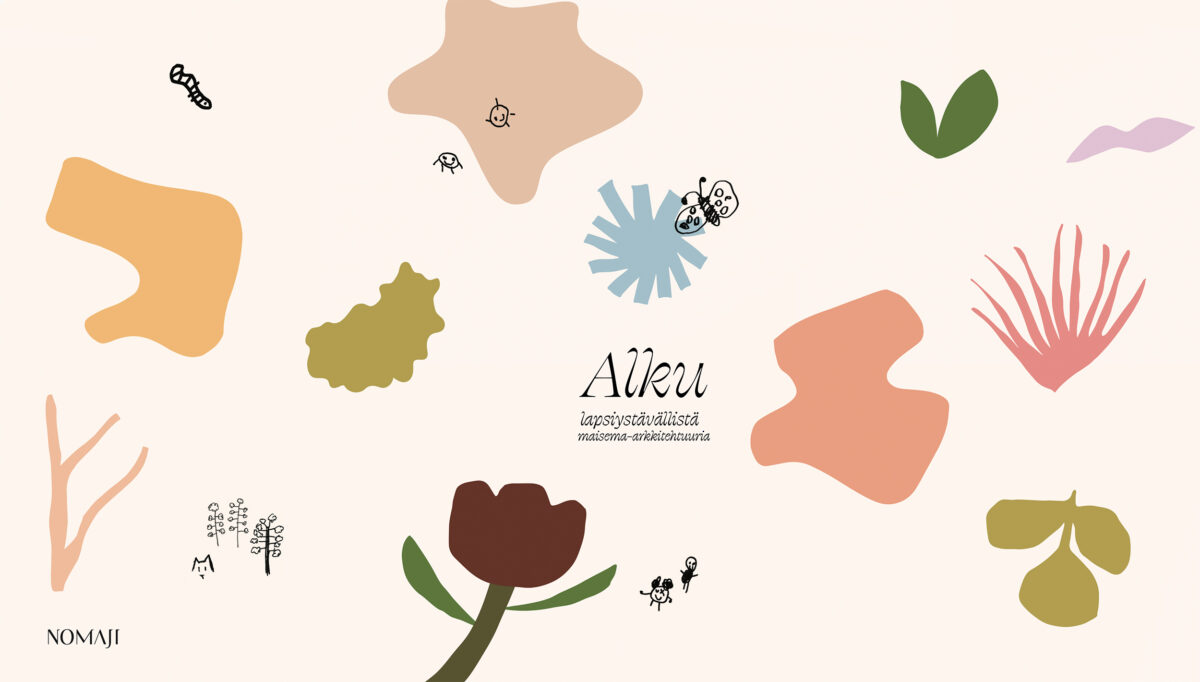
Type: Book
Year: 2025
Team: Mari Ariluoma, Lotta Jalava, Caroline Moinel (ed.)
Alku (beginning) explores child-friendly landscape architecture and urban planning through three key themes: nature, play, and movement. It delves into the importance of interactive design and the participation of children and youth. The book is part of Nomaji’s anniversary year, and in addition to theory and design principles it presents practical examples from projects over the past ten years. Alku – child-friendly landscape architecture is self-published by Nomaji, and you can get a copy directly from us, or from Bookm-ark.fi bookstore.
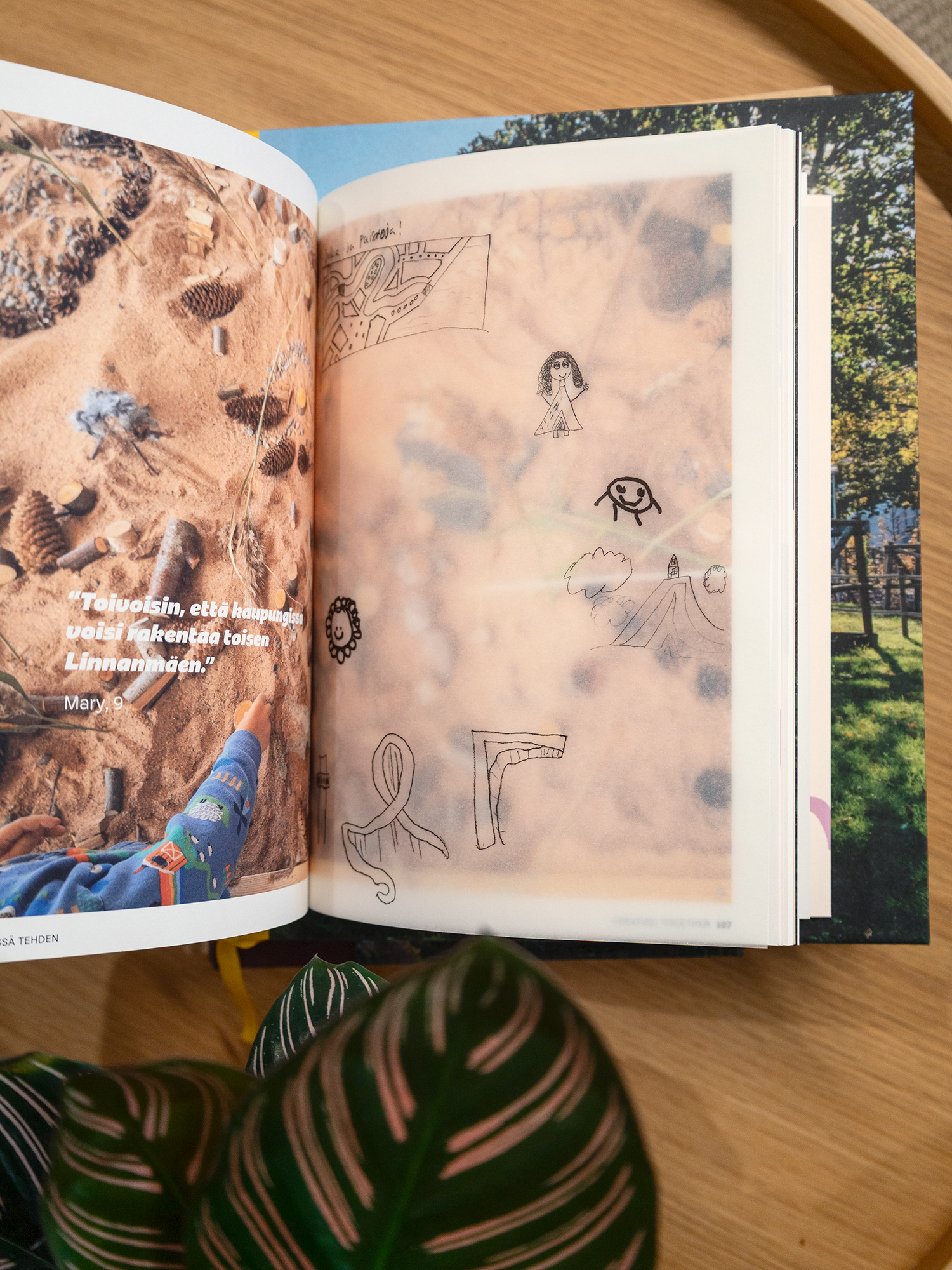
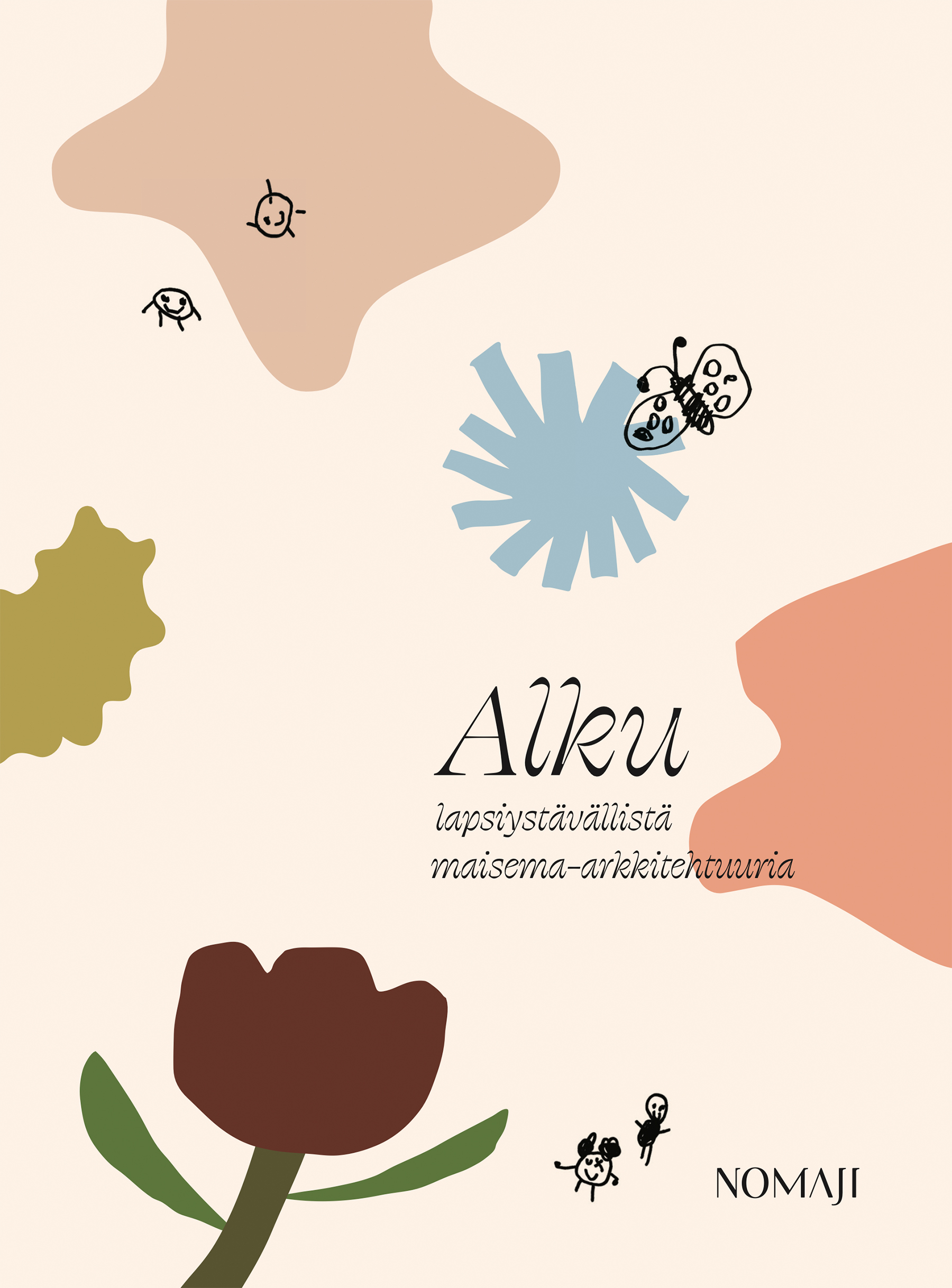
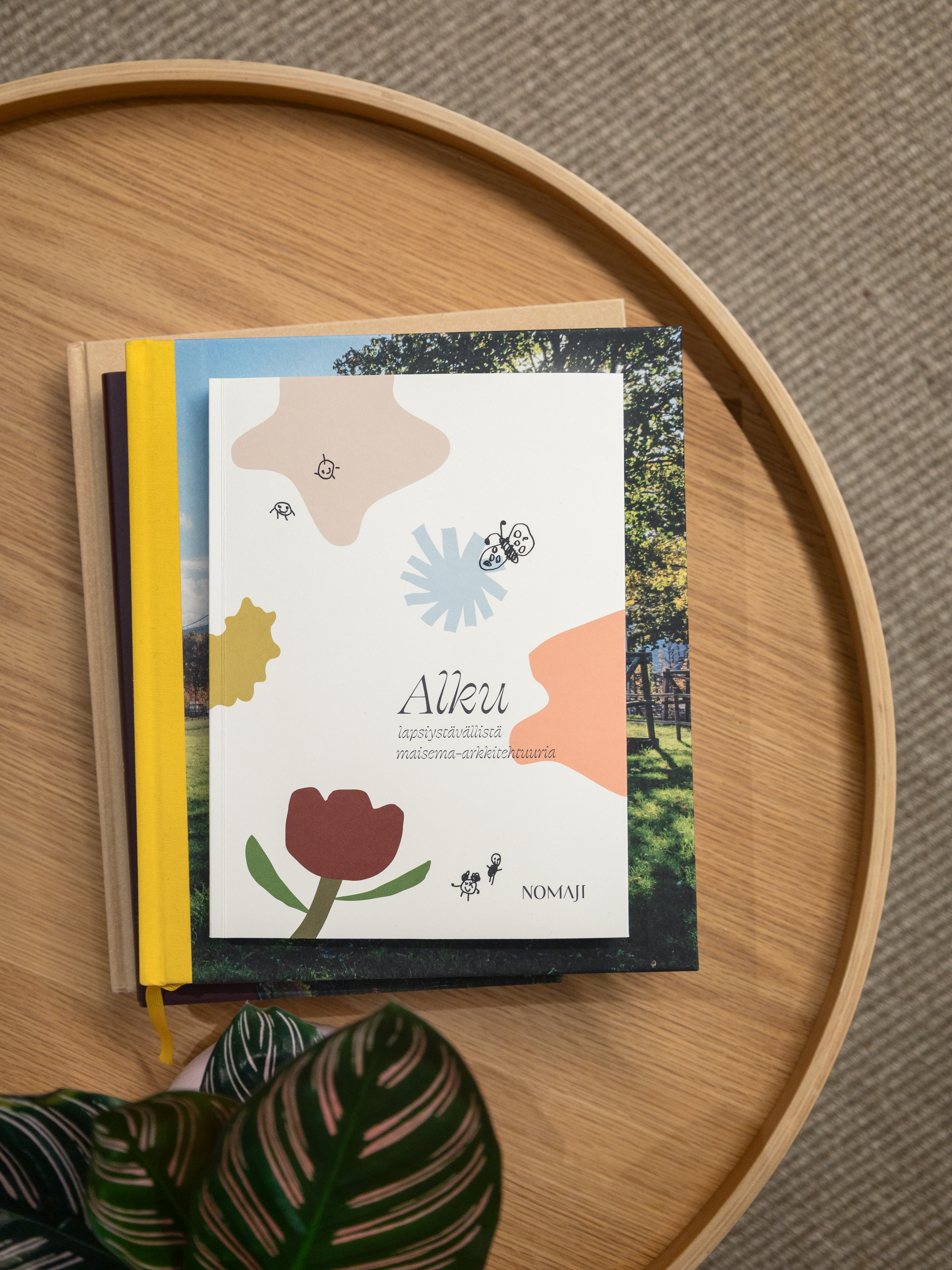
The city through a child’s eyes is a different world – a landscape of play, movement, and discovery. A city that works for children, however, works for everyone; it is accessible, pleasant, and safe. A child-friendly city is built on the idea that children are not just future adults, but active citizens of the present. Alku is written for adults: users of urban environments, designers, and developers. We hope it provokes thought, but above all, inspires action. This book is just the beginning – an invitation to continue the conversation and to develop child-friendly design together.
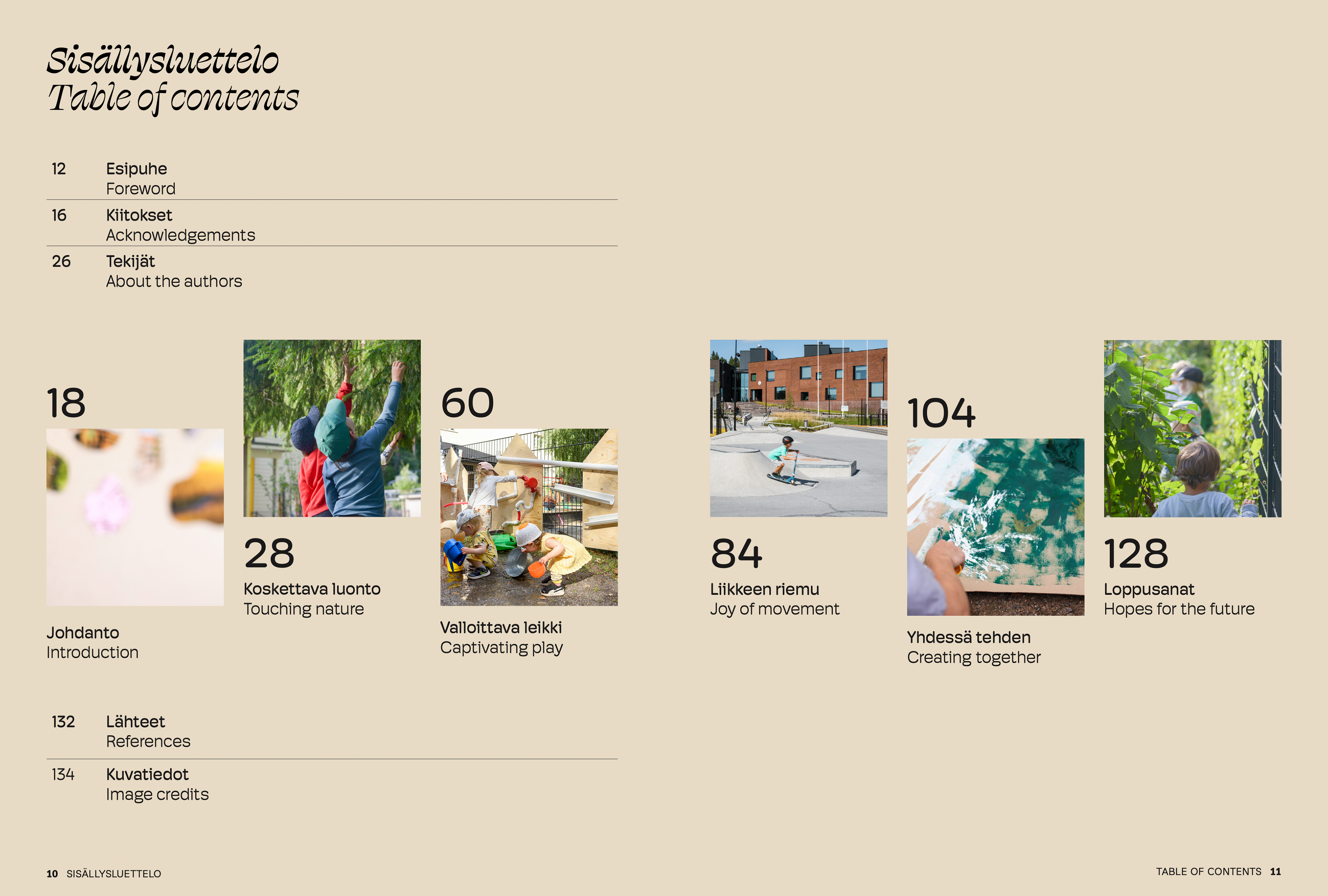
Alku is a child-friendly design approach developed by Nomaji, placing children’s rights and holistic well-being at the heart of the design process. It originated from the design of school and daycare landscapes but can be applied to the planning and development of all built environments. Alku emphasizes that when an environment supports children’s well-being, it benefits the entire community. The approach is built on three key principles: enabling contact with nature, supporting spontaneous movement, and promoting learning in everyday environments. Through these principles, the city is seen as a place where nature, movement, and learning are woven into the fabric of a child’s daily life. The physical environment can serve as a starting point, a beginning, for play, movement, and learning.
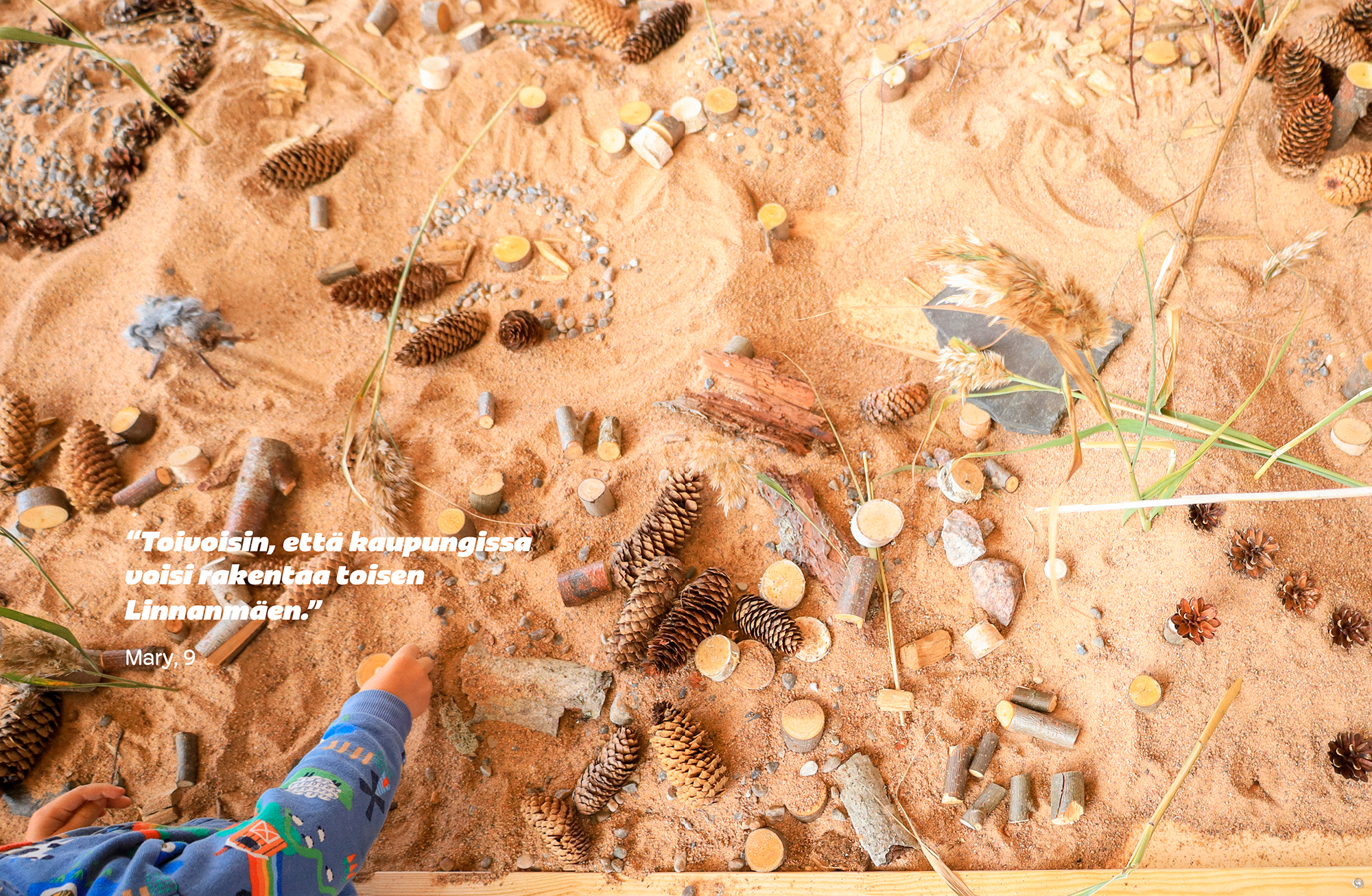
At the heart of the approach are the users themselves: spaces come to life only when they are embraced and made one’s own. A child-friendly city also considers other species, recognizing that the well-being of nature is foundational to human well-being. Such a city does not exclude other users; rather, it enriches urban space, making it more diverse, engaging, safe, and healthy for everyone. Alku offers concrete tools for analysis, participation, and design solutions that place the well-being of children and youth at the centre of planning. Participation is at the core of the Alku method. Children’s perspective brings fresh ideas and everyday expertise into the design process. The method is adaptable to various scales, from urban planning to the implementation of outdoor spaces, and supports ecologically and socially responsible design. Alku is a way to care for the future.
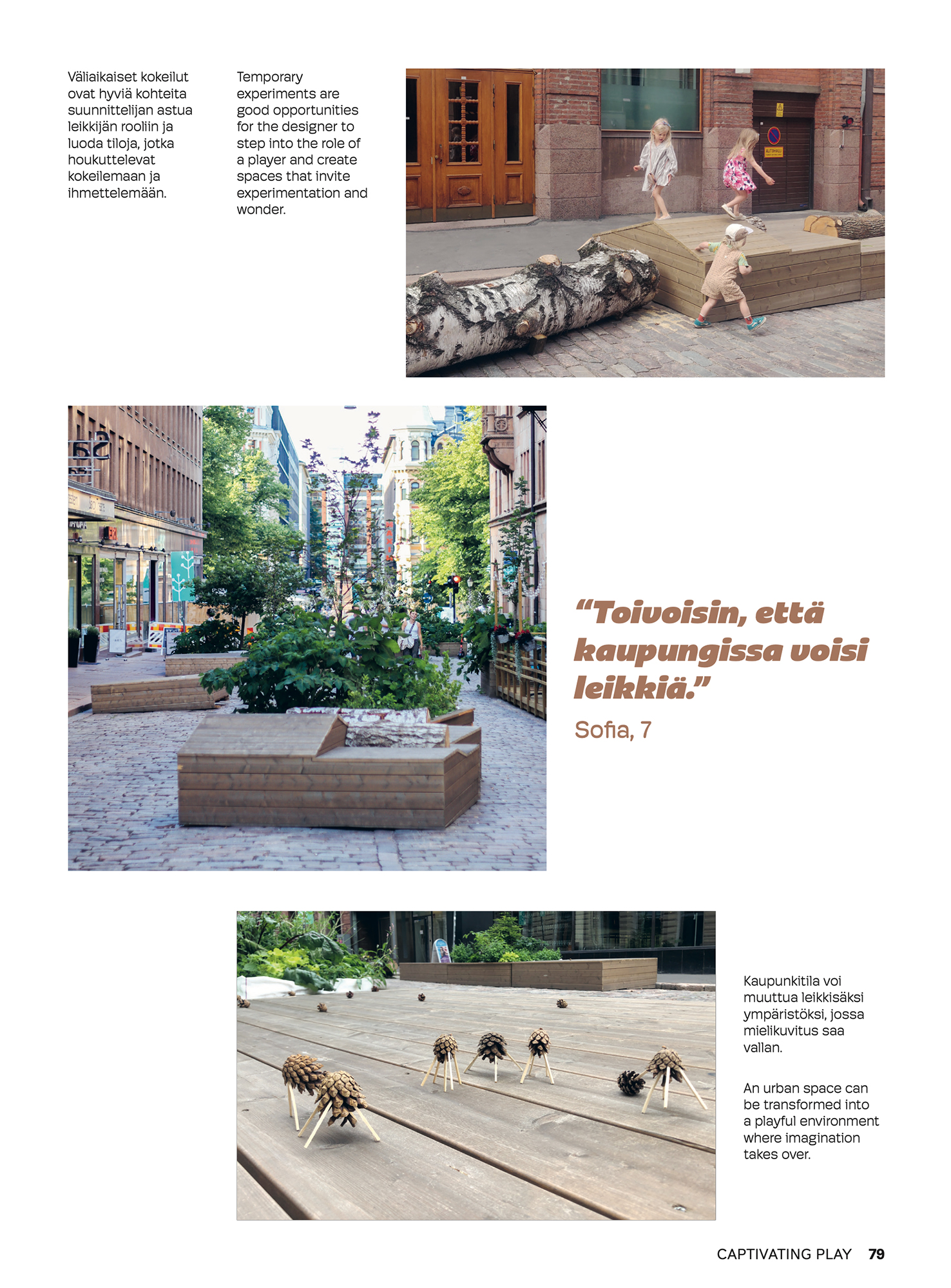
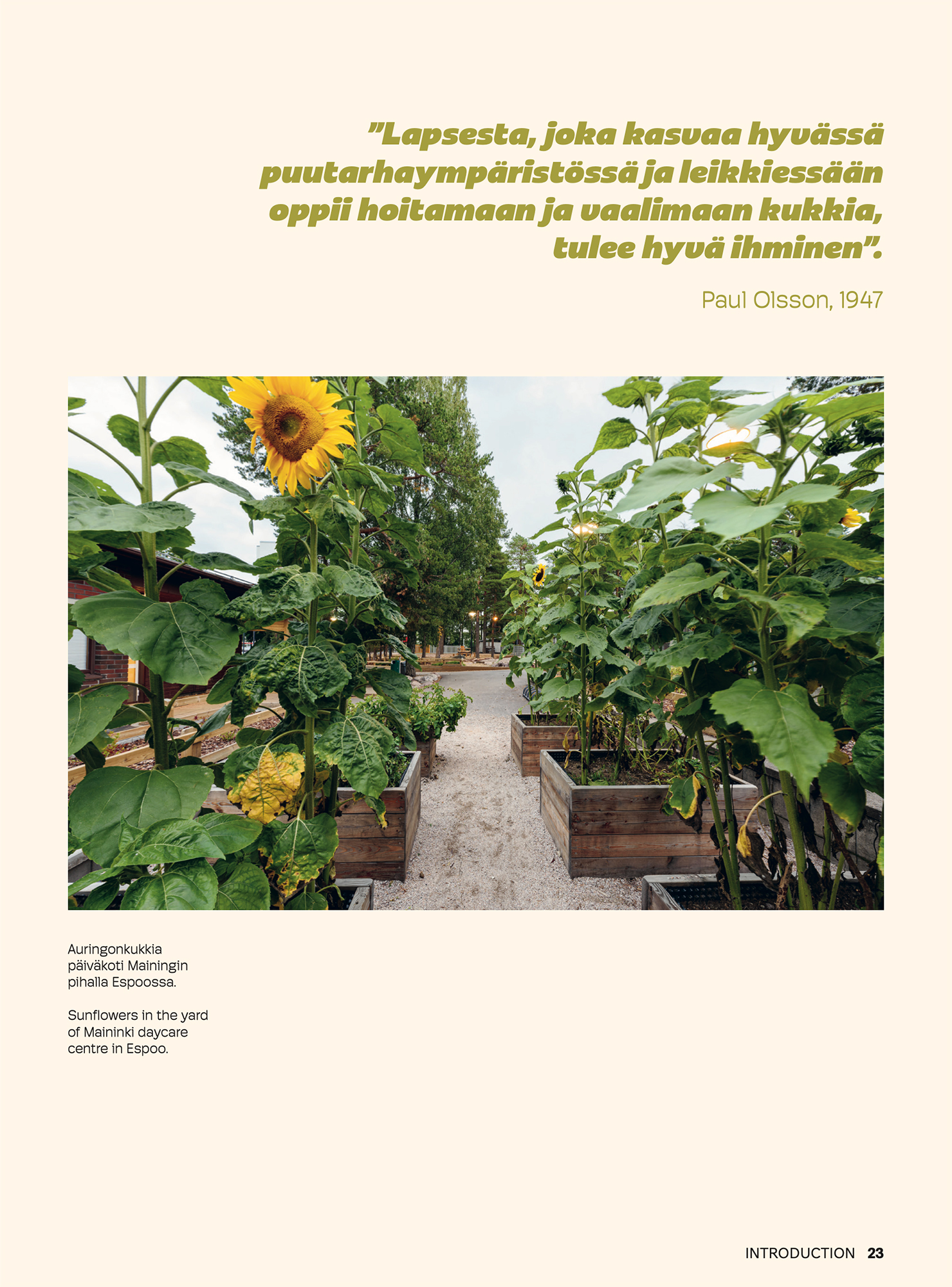
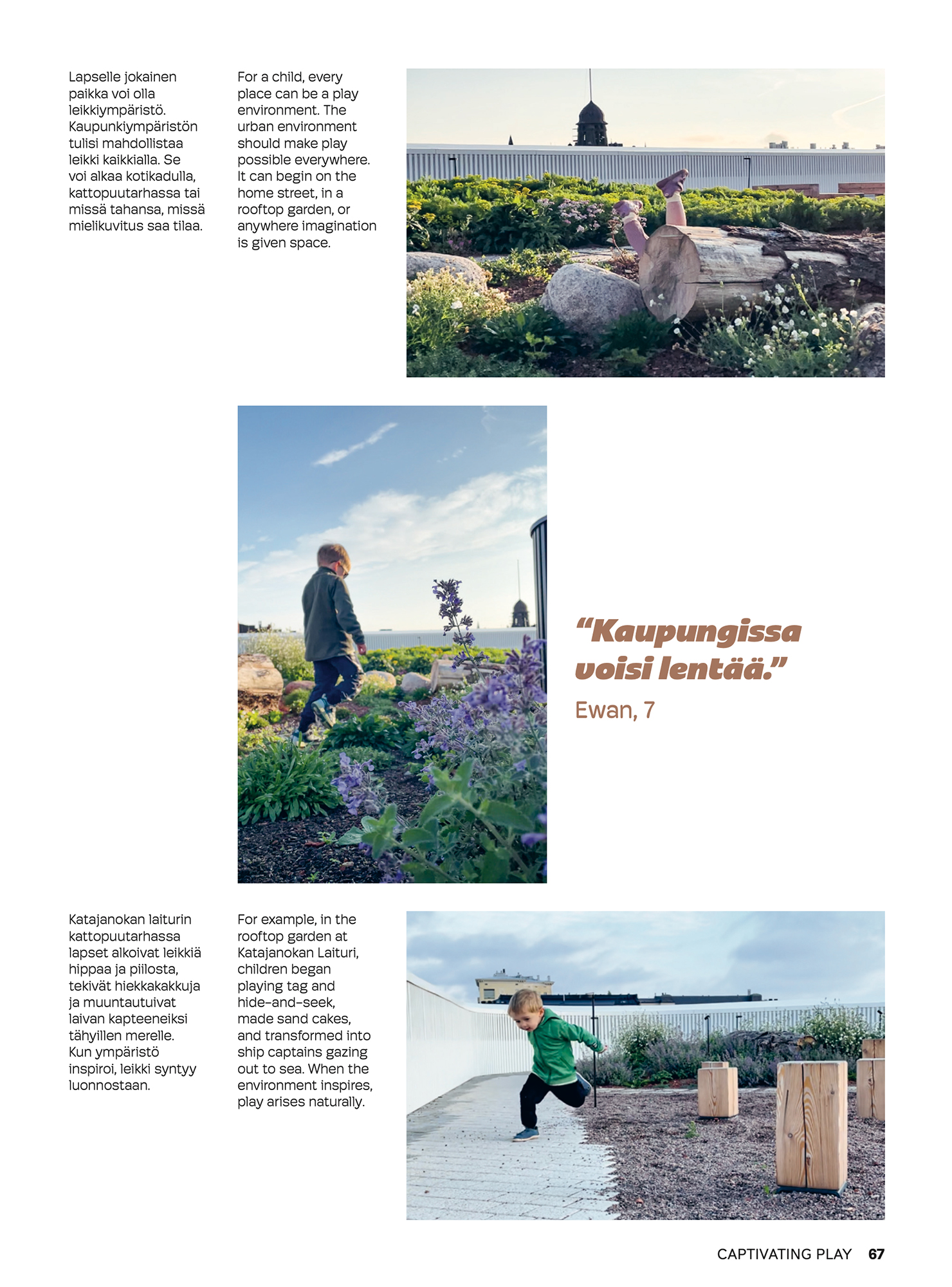
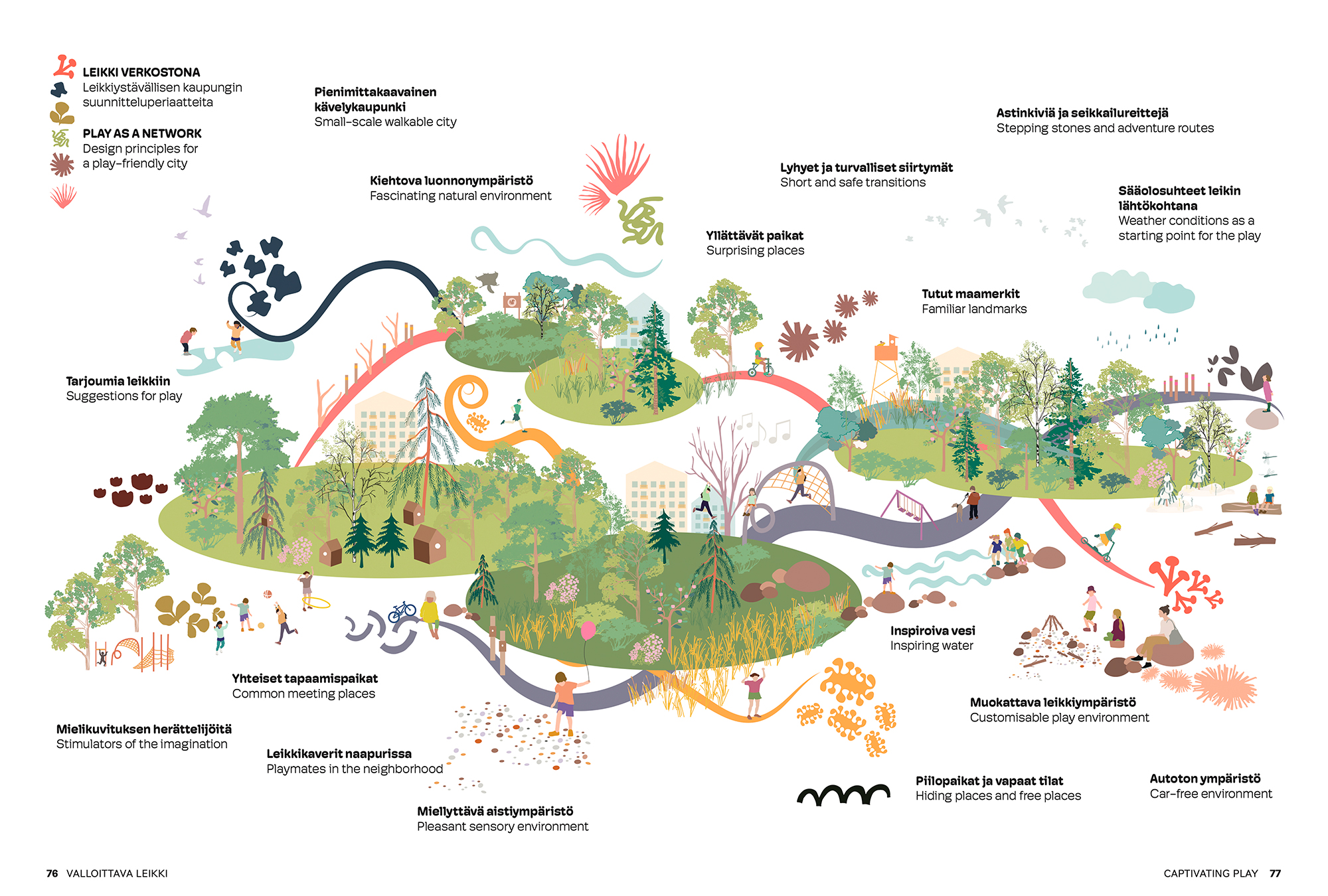
Alku – child-friendly landscape architecture
Edited by
Mari Ariluoma, Lotta Jalava, Caroline Moinel
Contributors
Mari Ariluoma, Anni Järvitalo, Varpu Mikola, Riikka Nousiainen, Hertta Ahvenainen, Rosa Haukkovaara, Maria Ilina, Lotta Jalava, Pihla Jokinen, Iida Juurinen, Iiris Lampi, Caroline Moinel, Inka Norros, Annika Pousi, Lotta Pulkkinen, Kaisla Rahkola, Alex Salminen, Maija Siiki, Minna-Maija Sillanpää, Laura Tuorila, Sari Åstrand
Graphic design
Caroline Moinel
Hand-drawn illustrations
Lotta Jalava
Printing
Grano, Helsinki 2025
Publisher
Nomaji maisema-arkkitehdit Oy
A big thank you to our clients and partners, researchers, science afternoon guests and participants, photographers, the students of architecture school Arkki, and all Nomaji team members! This is only the beginning.
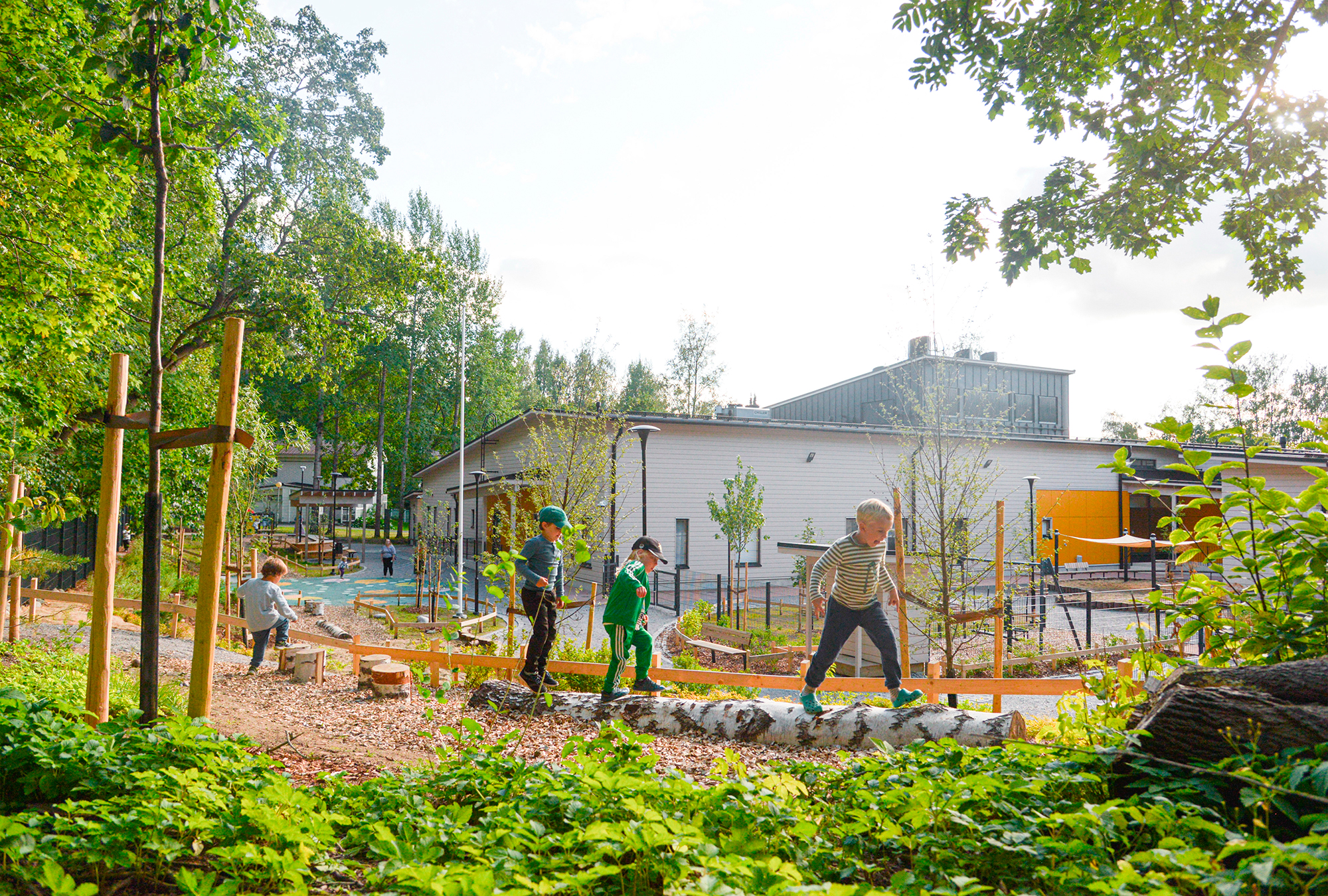
Pictures on this page: Caroline Moinel, Hanna Pielikko, Maite González Laurens, Aino Aksenja Haro & Nomaji