
Location: Espoo
Type: Local environment plan
Client: City of Espoo
Year: 2024-2025
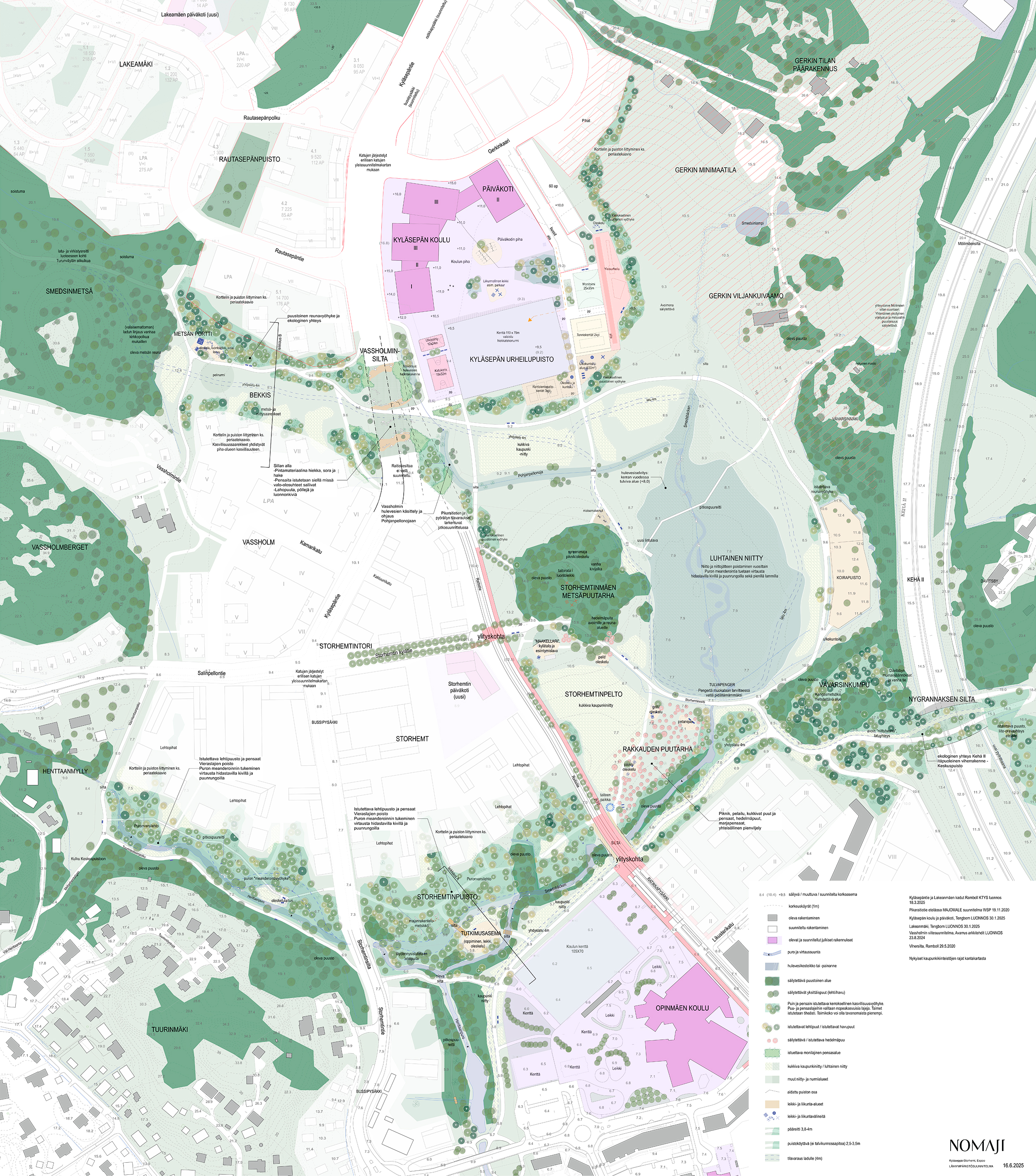
Between the centre of Suurpelto and Turunväylä, new residential areas of Kyläseppä and Storhemt, supported by a possible light rail line, are being planned. The area is also being zoned for a workplace area, commercial services, a school, a sports park and a large body of recreational areas to serve the whole of Suurpelto. The Kyläseppä-Storhemt local environment plan brings together the surrounding local plan areas and presents guidelines for the development of the central park area of Suurpelto. The work examines the conditions for developing an area of cultural and historical value that is challenging in terms of ecological connections.
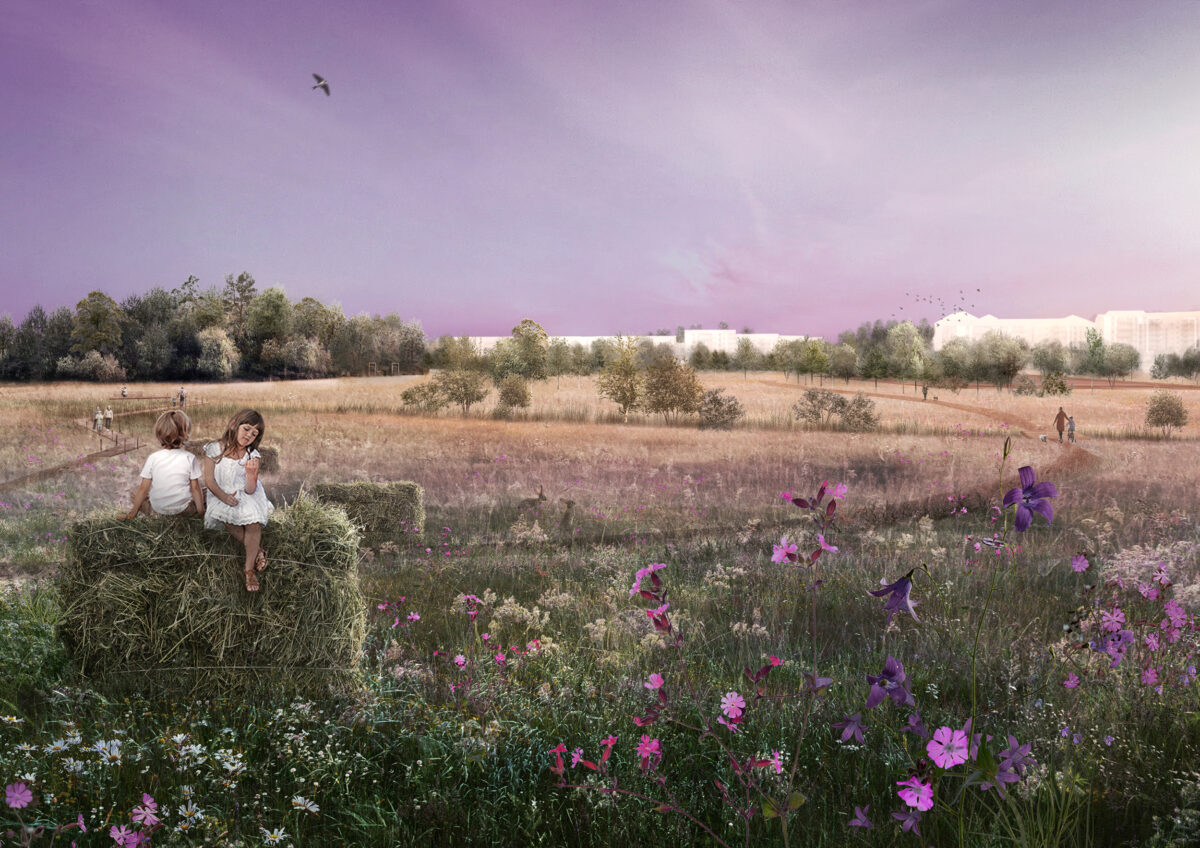
Landscape history is a valuable attraction factor in the area and creates a unique identity for northern Suurpelto. The open, wide cultural landscape that has given Suurpelto its name is a reminder of the centuries-long history of farming in the area. The cultural landscape consists of open farmland between forested ridges, and village hills where settlements were located. The character of the area will change significantly as a result of construction. The starting point of the local environment plan is to preserve the remaining features of the Smedsby-Hemtans-Dåvitsby cultural landscape in future recreational areas and on the Gerk farm. Construction and population growth will also cause significant changes to the area’s nature. Supporting and improving the ecological connection between Espoo Central Park and the nature core areas east of Ring II was a key starting point for the planning.
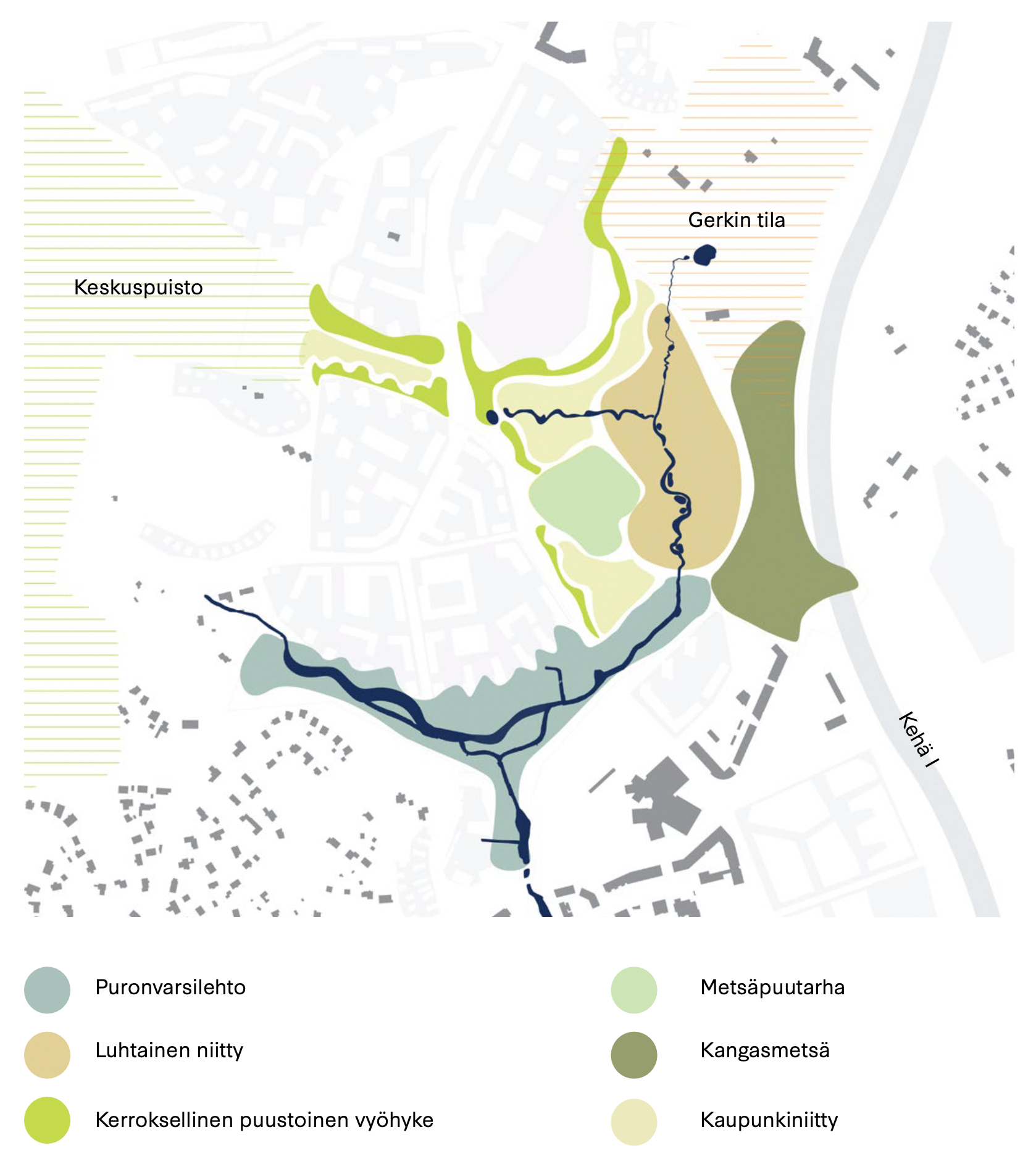
The concept of the local environment plan is crystallised as reinterpretation of the cultural landscape. The new park complex is a naturally and functionally diverse recreational area that preserves features of the cultural landscape. The park is being developed as a communal meeting place bringing residents together. The biodiversity of the old farmland’s nature will be supported and increased, and the area’s resilience, i.e. the ability to adapt to changes and recover from their consequences, will be improved. The ecological connections in and through the area are developed, and landscape cultivation is continued by creating new culturally influenced biotopes.
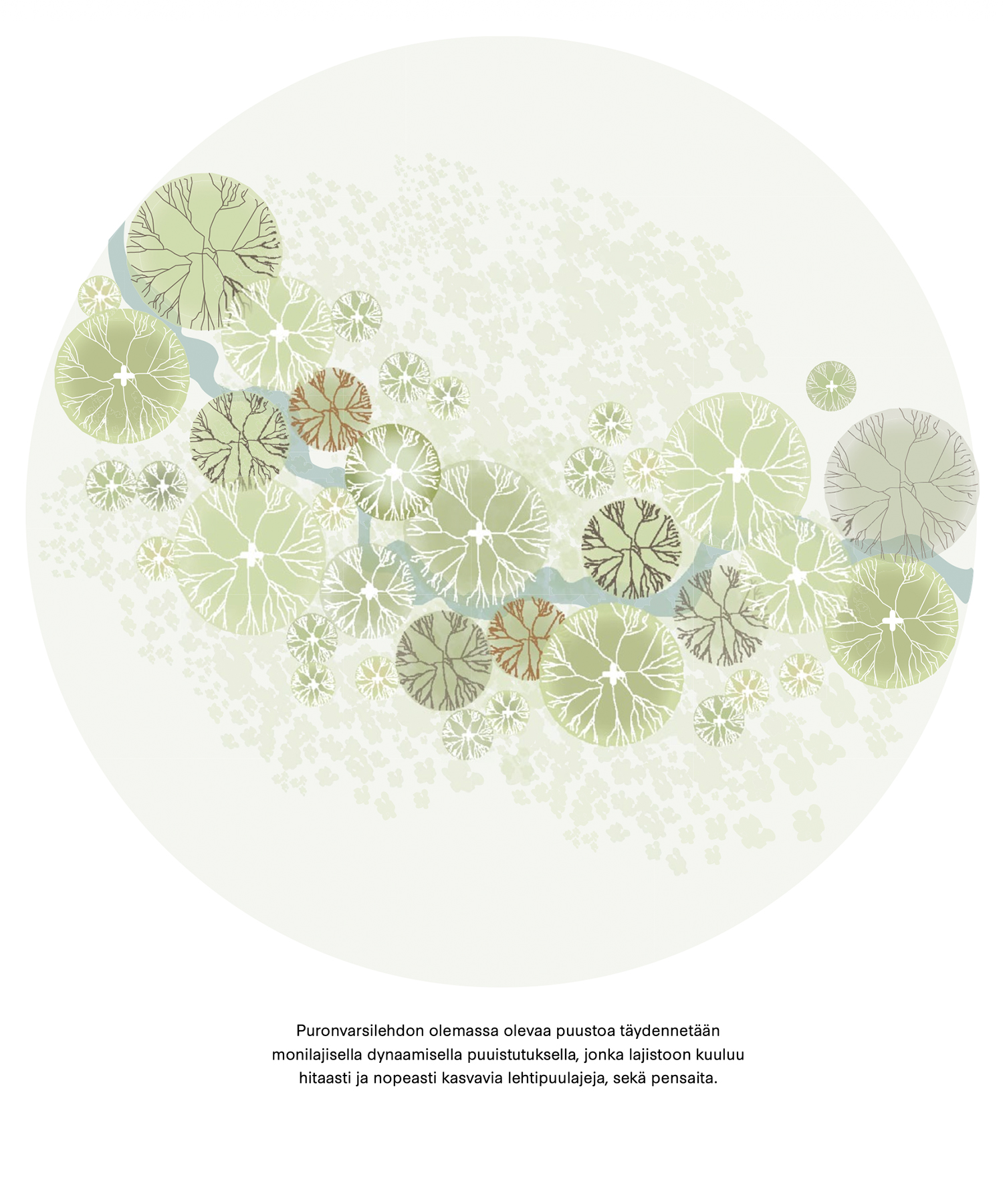
Culturally influenced biotopes are habitats created or contibuted to by human influence. Using biotope-based design, the work developed novel ecosystems that do their part in supporting biodiversity and the realisation of ecological connections. The biotopes were designed based on the area to be suitable for each location. The biotopes were examined in the long term, as they change and are allowed to change over time and as succession progresses.
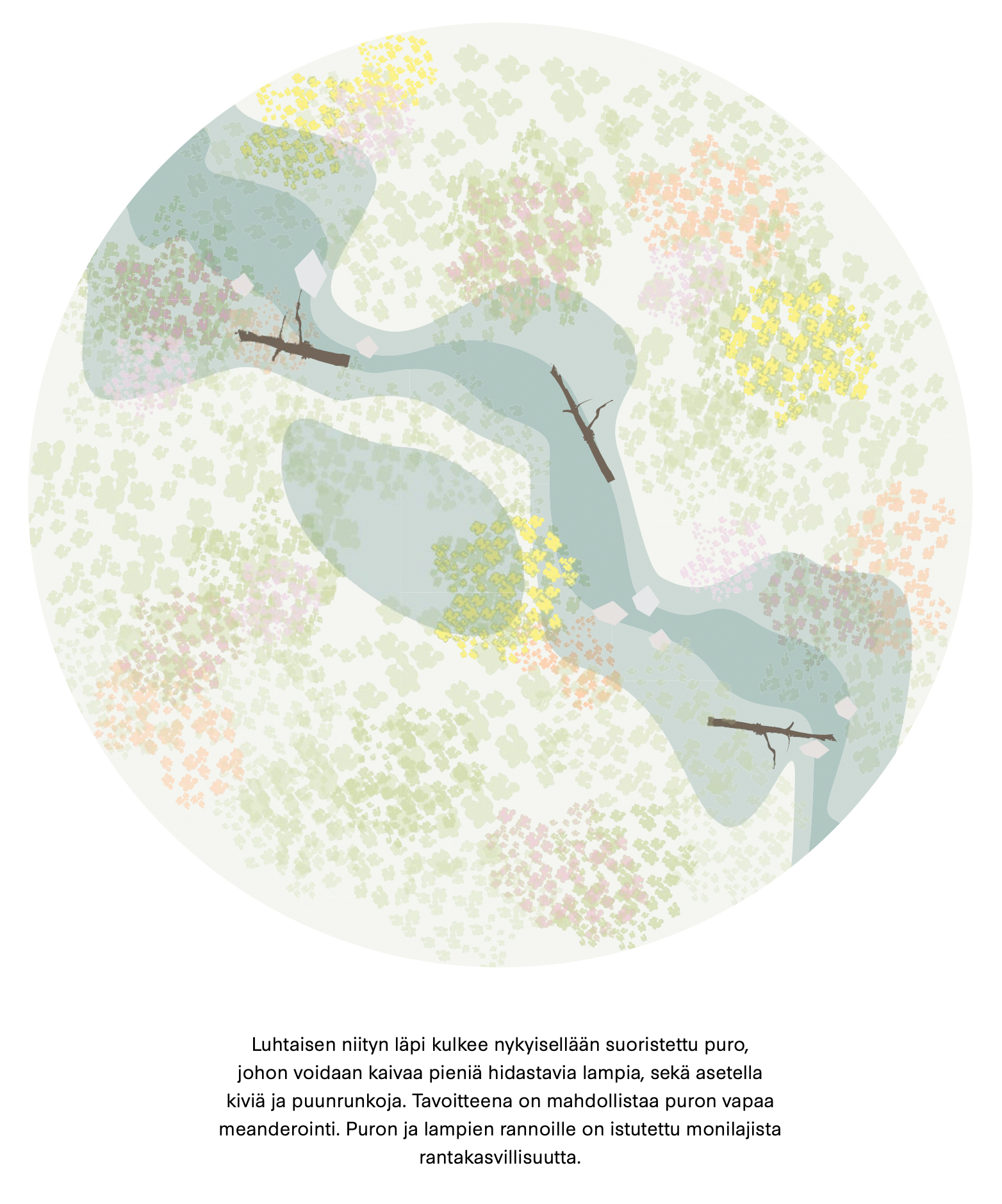
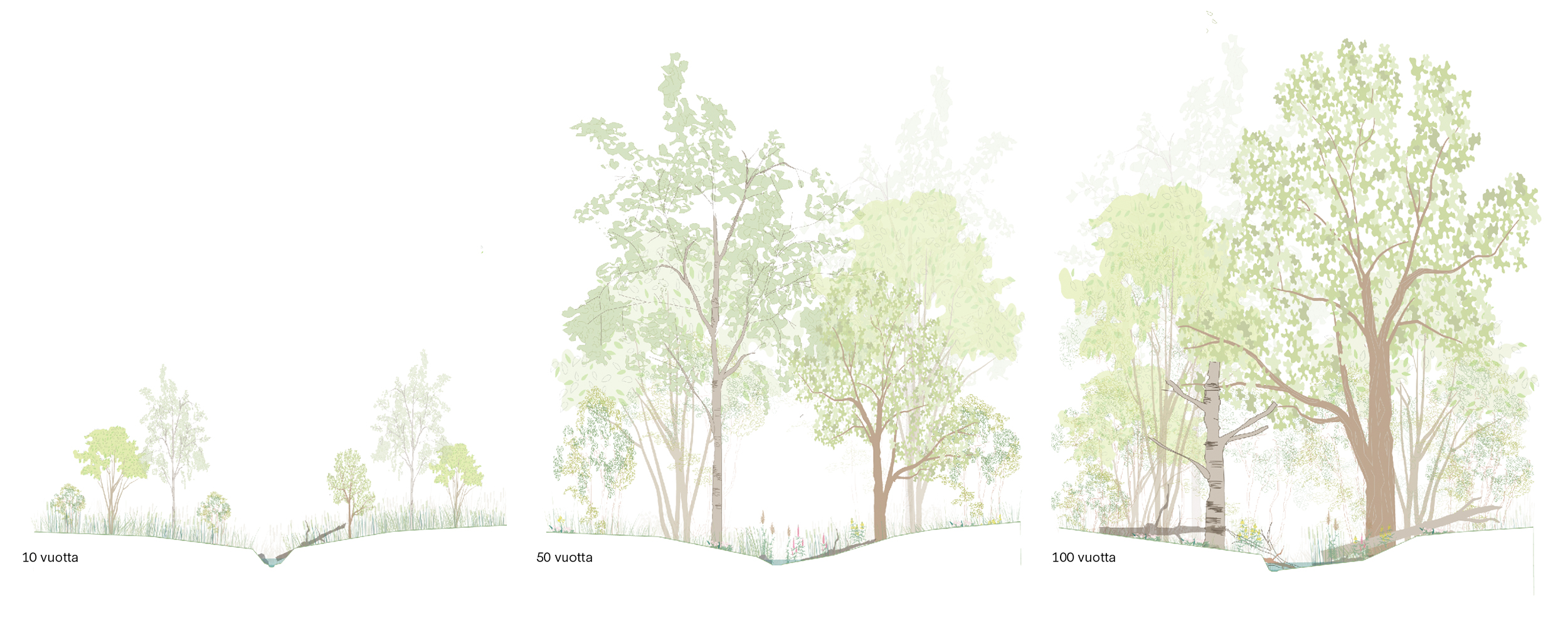
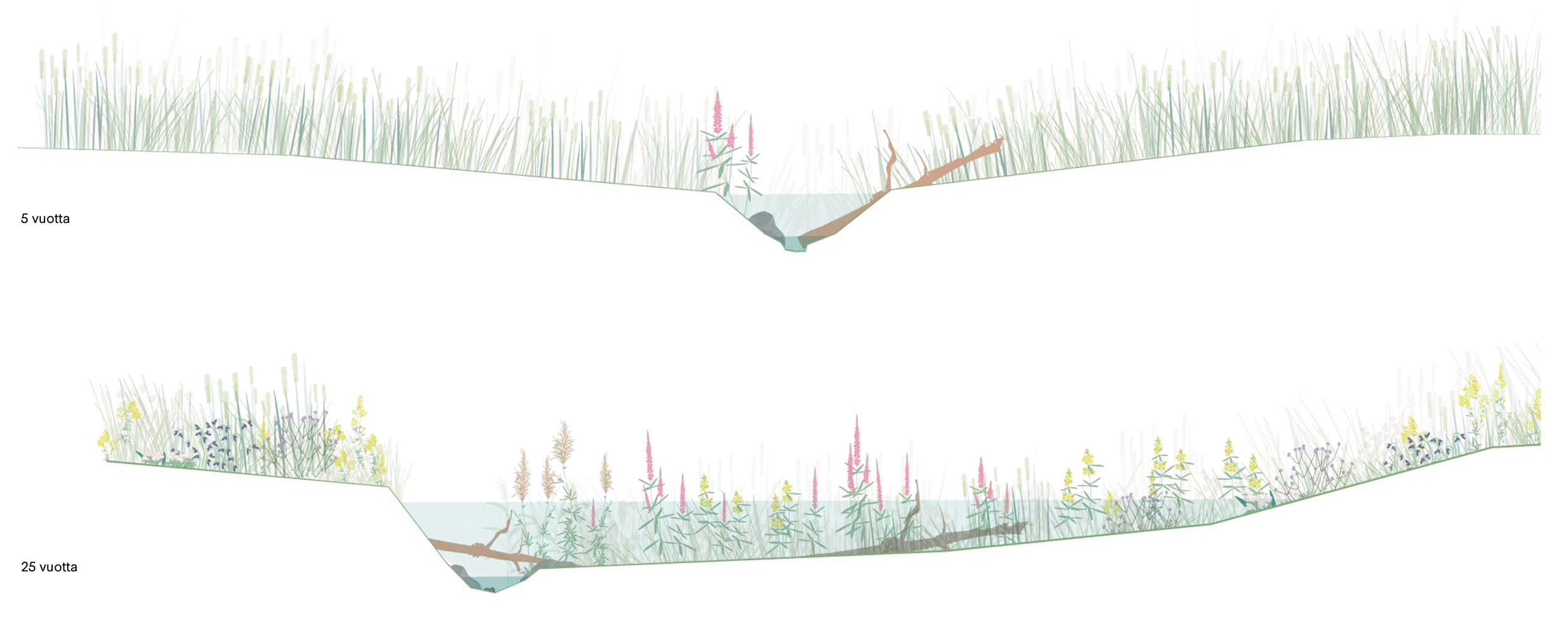
Cultural history was taken into account in the design by preserving and emphasising the characteristics of the landscape, for example by improving the readability of landscape history and by carefully planning the edge zones. Key views of landmarks and the open landscape, such as the view between Gerk Manor and Storhemt village hill, are being preserved. Activating the old settlements, village hills increases residents’ awareness of the area’s history and highlights the role of historically important places.
Storhemt’s historic village hill is the heart of the future park. Storhemt hill is an ancient relic area, where only stone foundations remain of its buildings. In its current state, the area is an overgrown garden with old deciduous trees, lilacs and other garden plants. The village hill is developed into a communal, edible forest garden, where the structures and vegetation remind of the area’s history. The residents’ association’s existing cherry tree park is developed as the sunny counterpart to the forest garden. A new village hall is proposed to be built in front of Storhemt hill, forming a unique landmark between new construction and the cultural landscape.
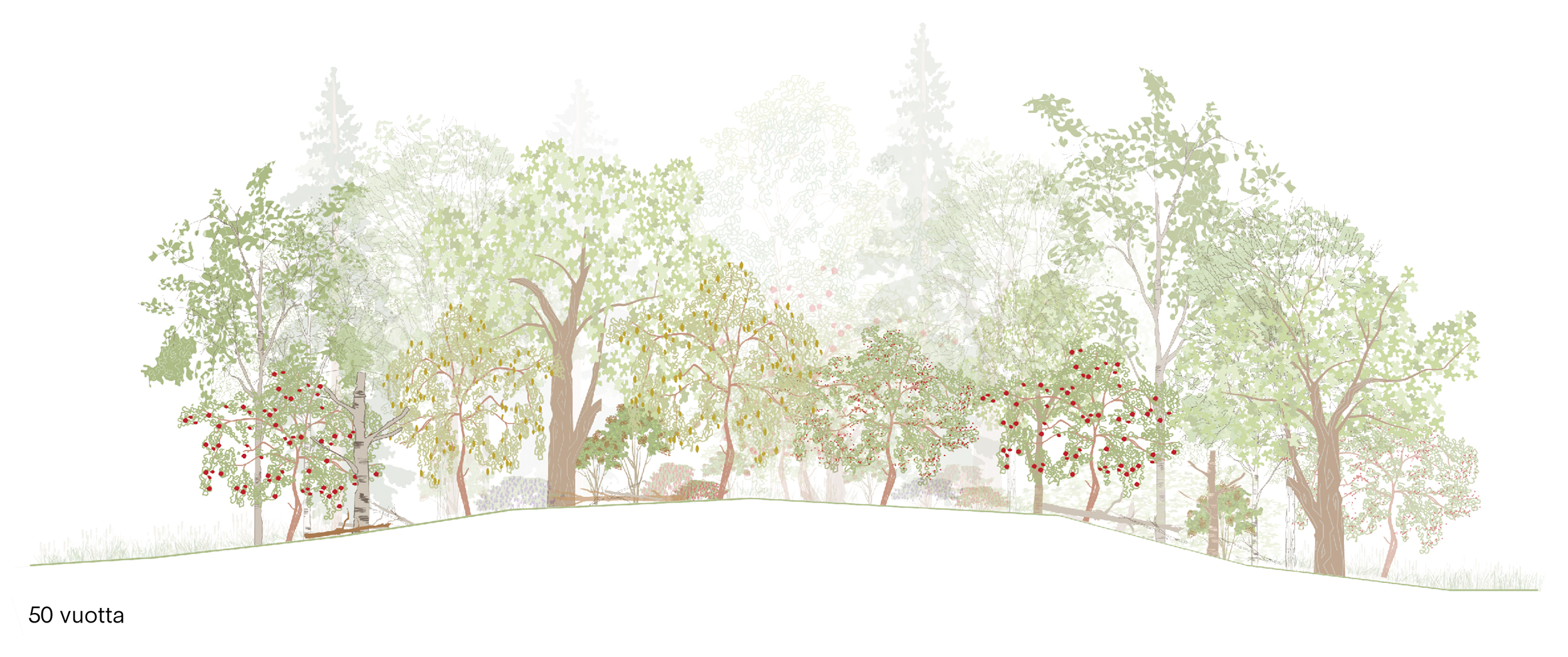
The Kyläseppä-Storhemt local environment plan combines consideration of landscape history, development of ecological values and management of growing recreational pressure in an interesting way. The preservation of landscape values and natural values are not mutually exclusive, rather the area’s agricultural history inspired to open-mindedly propose a diverse biotope cavalcade for the planning area. As a recreational area, this kind of environment offers a different experience compared to more structured parks. For the identity of a new residential area, a new nature recreation area is valuable, and nature management can also be tied into resident activities or school programs.
Read more on the City of Espoo website: Detailed planning of the Kyläseppä and Storhemt areas